Key Nutrients to Boost Your Baby’s Brain Development
What to eat during pregnancy to nourish your baby’s growing brain. A dietitian’s guide to calories, complex carbohydrates, fiber, healthy fats, omega 3s, and protein, with balanced meal examples from around the world.
Ashwini Achutharaman, RD Intern & Dr. Abrar Al-Shaer, PhD, RD ·
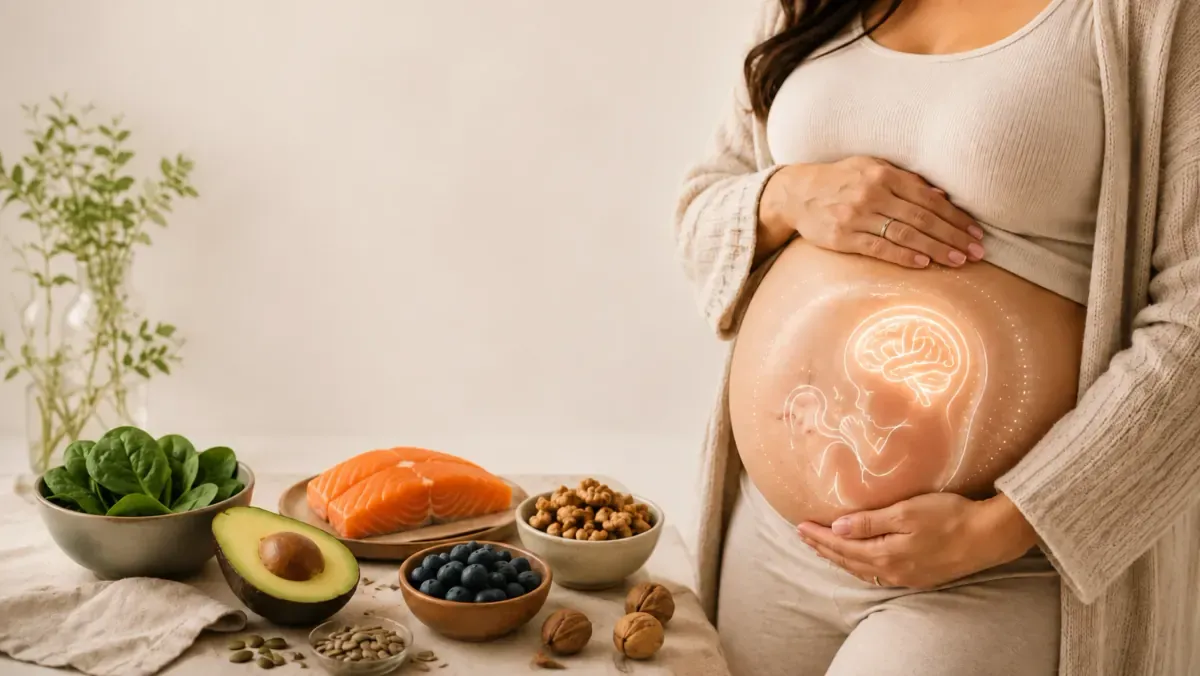
Congratulations, you just found out you are pregnant! If your goal is to raise the strongest and most capable baby, that starts with what you are putting into your body. Read on to learn how you can optimally structure your meals so that both you and your growing baby are nourished and as strong as can be.
Calories
Nurturing a growing fetus takes a lot of energy (50,000-70,000 calories throughout the pregnancy to be exact!). Not eating enough food can be problematic during pregnancy. Your energy needs are relatively constant during the first trimester but increase during the second and third trimesters. Each woman’s needs are different, which can make it challenging to set a specific amount of food to eat for everyone. The best way to figure out how much to eat is by measuring your weight gain. Throughout the course of your pregnancy, it is normal to gain around 25-35 pounds. Not everyone’s weight curve matches diagrams in a textbook. Some women may gain more weight initially and then plateau, while others gain more weight later in their pregnancy. Our team is happy to work with you to determine if your weight gain is on track and how you can adapt your nutrition accordingly.
What types of carbohydrates should I eat during pregnancy?
Carbohydrates are the preferred source of energy for you and your growing baby. Without the glucose from carbohydrates, your body sends signals that it is in a state of starvation and tries to get energy from other areas of your body. During pregnancy, you do not want your body to feel starved as this will negatively impact your baby.
There are two main types of carbohydrates: simple and complex. Simple carbs are foods that are easily digested so will only give you a short burst of energy. Rather than making these the whole meal, aim to have them be only a portion of your plate. For example, rather than eating a bowl of plain pasta, add some sautéed vegetables, a drizzle of olive oil, and a protein of your choice to make it a more balanced and filling meal.
Complex carbohydrates take longer for your body to process, which means you get energy for a longer period of time. Whenever possible, try to swap your simple carbs for more complex ones. This could be as simple as buying whole wheat pasta instead of regular pasta. Vegetables are also high in complex carbs, which makes them a great centerpiece for your meals.
Why is fiber important during pregnancy?
Fiber is an essential component of a healthy pregnancy diet. A high fiber diet was shown to decrease the incidence of gestational diabetes and lower fasting glucose levels [1]. It may also help reduce excessive weight gain and preterm birth [1]. Not getting enough fiber may delay your baby’s brain growth. Fiber works to signal to your baby through the gut microbiome. The maternal-fetal microbiome is a strong connection that gives your baby a glimpse into the world it is going to be raised in. A world that is filled with colorful fruits and vegetables is more likely to foster a well-developed brain than one that lacks fresh produce.
To make sure you are getting enough fiber, include at least 2-3 servings of fruits and/or vegetables at every meal.
Is fat okay to eat during pregnancy?
Fat is used as an energy source for both the mother and the fetus during pregnancy. Towards the end of pregnancy, the fat is used to help your baby develop strong muscles and brain.
Different fats affect the body in different ways. Saturated fats are more likely to accumulate in blood vessels and lead to inflammation. Women who had nearly half of their daily calories from saturated fats had a 49% higher chance of developing gestational diabetes [2]. These are found in animal-based products like red meat, as well as in fast food and ultraprocessed foods.
On the other hand, unsaturated fats can actually be beneficial during pregnancy. These are found in fish, olive oil, and nuts/seeds. One study found that children born to mothers who used at least 40mL (around 3 tbsp) olive oil and a handful of pistachios daily were more likely to be early walkers and less likely to require hospital care [3]. Another study found that a higher intake of nuts and seafood was linked to lower pregnancy BMI in the mother and higher education level in the child [4]. It is harder to overeat unsaturated fats, as they tend to be self-limiting. We recommend focusing on getting more plant-based fats and choosing leaner cuts of meat.
A specific type of unsaturated fat that you need to get from food is omega 3 fatty acids. The two omega 3s that are most impactful are DHA and EPA. DHA is important for brain development and function, especially in the area of the brain that controls decision making and social behavior [4]. EPA allows for proper metabolic health and immune function. Fatty fish are rich in both DHA and EPA. However, it is important to get fish that are low in mercury and to eat no more than 12 ounces of fish per week. An easy way to remember which fish to eat during pregnancy is to follow SMASH: salmon, mackerel, anchovies, sardines, and herring.
Note: none of the brands mentioned in this article are sponsored, however the practice receives 15% from Fullscript sales to cover overhead costs of maintaining the Fullscript dispensary page & practice.
If you are unable to get the recommended amounts of omega 3s from food, you can also take a supplement. We recommend the brands Nordic Naturals ProOmega 2000 or Carlson Labs Maximum Omega 2000, which have both a fish-based and an algae-based supplement. Both of these are available on our Fullscript page. As a bonus, if you use our link you will get an exclusive 20% discount on all the supplements on the platform!
How much protein should I eat during pregnancy?
Protein supplies the building blocks for both you and your baby. In the first trimesters, it is used to help your body adapt to create a safe environment for your growing fetus by strengthening your uterus, heart, and placenta. In later trimesters, it helps your fetus grow essential organs.
Not getting enough protein can damage both you and your baby. Your body can start to self-degrade by using muscle tissue for energy, leaving you feeling more fatigued during your pregnancy and postpartum. A low protein intake has also been linked to impaired cognitive and verbal function for your baby later in life [5]. If you want to calculate how many grams of protein you should be eating daily, multiply your pre-pregnancy weight by 0.5. If this number is less than 71g, then use 71g as your minimum amount.
Not all protein is created equal. Red meat and processed meat are linked to a higher likelihood of gestational diabetes, especially when eaten in the second trimester [6]. Plant proteins are less likely to be linked to insulin resistance. If you feel drowsy after every meal, you may be on the path to insulin resistance. Read this to understand the symptoms and what you can do about it. Choosing your protein sources boils down to diversity. Lentils, beans, and soy are all great options to add to your plate. If you are curious about the myths behind soy being bad for your hormones, read this article for a comprehensive breakdown of soy’s effect on the body. We recommend a 50-50 split of plant and animal based proteins. For example, you could have grilled chicken with rice for lunch and a tofu vegetable curry for dinner. As much as possible, try to get your protein from whole foods. If you are struggling to meet your needs, you can add a protein powder. We recommend the ones listed on Fullscript as they are tested for heavy metals and NSF certified.
What are examples of balanced meals for pregnancy?
We eat from plates and bowls, not calculators. Let us see what these recommendations would look like in some sample meals from different cuisines. Each meal is a balanced plate with complex carbohydrates, fiber, unsaturated fats, and a mix of plant and animal based proteins.
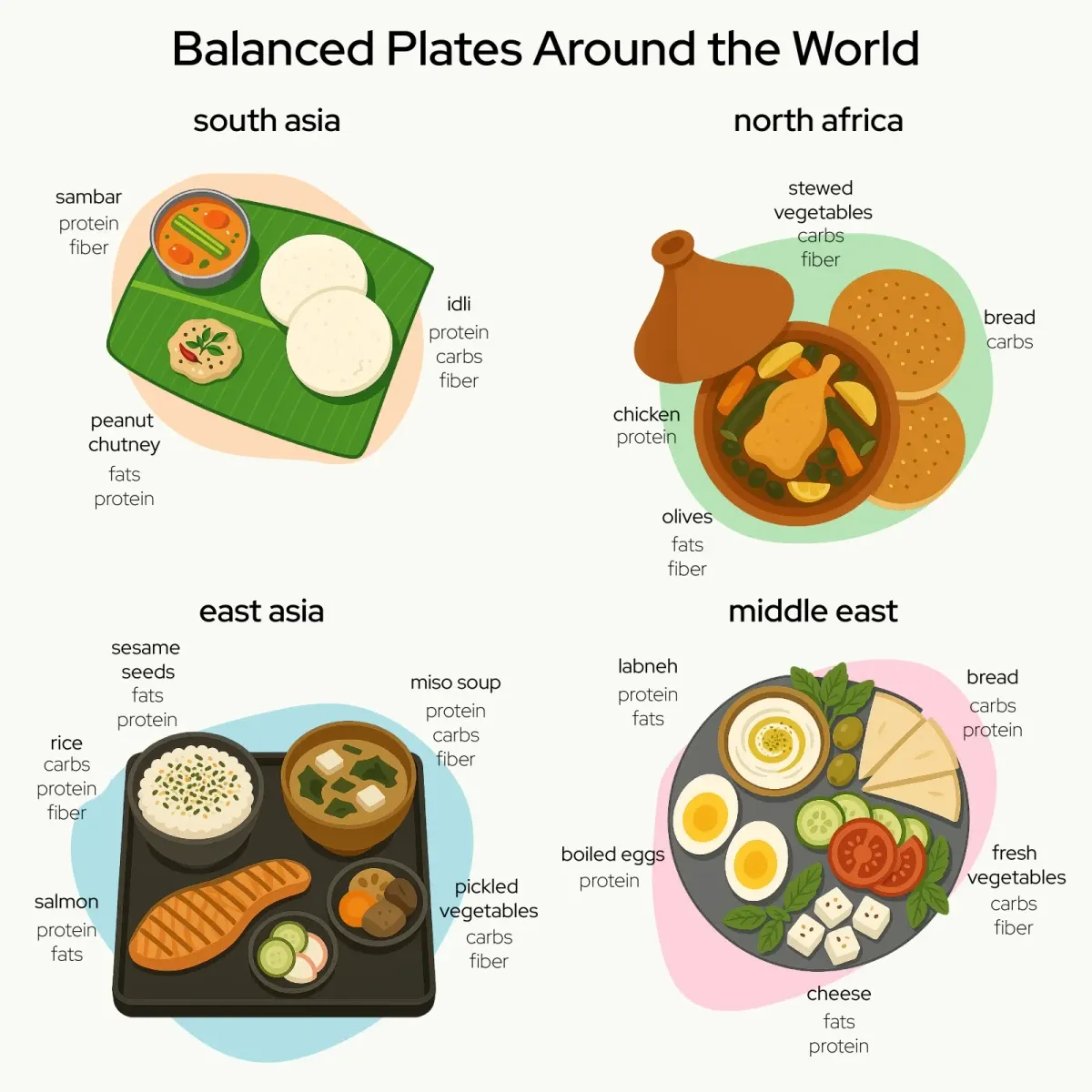
Structuring meals during pregnancy can be simple, as long as you follow this guide. Our team is happy to help you come up with ideas for meals that fit your needs and lifestyle.
References
- Zhang, D. Y., Cheng, D. C., Cao, Y. N., Su, Y., Chen, L., Liu, W. Y., Yu, Y. X., & Xu, X. M. (2022). The effect of dietary fiber supplement on prevention of gestational diabetes mellitus in women with pre-pregnancy overweight/obesity: A randomized controlled trial. Frontiers in Pharmacology, 13, 922015. https://doi.org/10.3389/fphar.2022.922015
- Association of dietary fat intake before and during pregnancy with the risk of gestational diabetes. https://doi.org/10.1186/s12937-025-01186-6
- del Valle, L., Melero, V., Bodas, A., Martín O’Connor, R., Ramos-Levi, A., Barabash, A., Valerio, J., de Miguel, P., Díaz Pérez, J.Á., Familiar Casado, C., et al. (2025). A greater adherence to the Mediterranean diet supplemented with extra virgin olive oil and nuts during pregnancy is associated with improved offspring health at six years of age. Nutrients, 17, 1719. https://doi.org/10.3390/nu17101719
- Maternal prenatal nut and seafood consumption and child neuropsychological function. https://doi.org/10.1016/j.ajcnut.2025.04.032
- Mottis, G., Kandasamey, P., & Peleg-Raibstein, D. (2025). The consequences of ultra-processed foods on brain development during prenatal, adolescent and adult stages. Frontiers in Public Health, 13, 1590083. https://doi.org/10.3389/fpubh.2025.1590083
- Yong, H. Y., Mohd Shariff, Z., Mohd Yusof, B. N., Rejali, Z., Tee, Y. Y. S., Bindels, J., & van der Beek, E. M. (2021). Higher animal protein intake during the second trimester of pregnancy is associated with risk of GDM. Frontiers in Nutrition, 8, 718792. https://doi.org/10.3389/fnut.2021.718792