Eating for Your Cycle: Beyond the Hype of Seed Cycling
Is seed cycling backed by research? A dietitian explains why not, and the iron, zinc, selenium, magnesium, and omega 3s that do support your period.
Ashwini Achutharaman, RD Intern & Dr. Abrar Al-Shaer, PhD, RD ·
Your period is one of the most intricately balanced processes that happens in your body. For a simple visual guide to understanding how your period works, follow along with our story of your period from the perspective of your egg cells. Think of your period as your body’s monthly report card. In order to get an A every month, your body requires certain nutrients, with each one serving a different purpose. Not getting the right amount of vitamins and minerals can throw off your internal balance and cause symptoms like period cramps. Read on to learn about some of the nutrients you should be focusing on during your period.
Is seed cycling legit?
If you spend any time on social media, you have probably come across seed cycling. The idea is that you eat flax and pumpkin seeds during the first half of your cycle, then switch to sesame and sunflower seeds during the second half, and that this rotation will rebalance your hormones.
The honest answer is that seed cycling has never actually been tested. There are no clinical trials showing that rotating seeds by cycle phase changes your estrogen, your progesterone, or your symptoms. The protocol was not built from research on menstrual cycles at all.
Seed cycling also misses the bigger point. Your body is not waiting for a particular seed on a particular day. What it needs is a steady supply of the nutrients described in this article, and almost none of them are unique to seeds. Zinc is in oysters, beef, lentils, and chickpeas. Magnesium is in leafy greens, beans, and dark chocolate. Iron is in red meat, lentils, tofu, and spinach. Selenium is in fish, eggs, and Brazil nuts. If you rotate your seeds perfectly but eat the same three meals every week, you have not actually given your body more of anything.
None of this makes seeds bad. Flax, pumpkin, sesame, and sunflower seeds are genuinely nutritious and worth keeping in your rotation. Eat them whenever you like. Just eat them alongside a wide variety of other foods rather than on a schedule, and put your energy into the nutrients below, which do have research behind them.
Can low iron affect your period?
Iron is one of the most important minerals in your body with many functions ranging from metabolism to immunity. One of its most crucial functions is to carry oxygen from your lungs to the rest of your body. Your cells can only perform optimally if they have enough oxygen, which is why people who suffer from low iron tend to be less energized. If you want to understand whether your iron levels are in check, read our blog Getting Proper Iron Testing: You May Have Low Iron and Not Know It.
Iron is even more essential for menstruating women. It regulates blood flow to your ovaries to ensure adequate nutrients are being delivered to the growing cell. Iron is also part of the process that breaks down hormones like estrogen and progesterone into other forms that your body can use.
Getting enough iron from your diet is important at all stages of your menstrual cycle, though you may want to increase your intake during the days that you are bleeding on your period to restore any iron lost in your blood. Foods that are rich in iron are oysters (6.9 mg per 3 oysters), sesame seeds (2.1 mg per tbsp), cooked spinach (6.4 mg per cup), and cooked lentils (3.3 mg per 1/2 cup) .
To maximize the amount of iron your body can absorb, pair iron-rich foods with vitamin C-rich foods. This could be as simple as a squeeze of lemon over your sautéed spinach, or cooking your lentils with tomatoes. In addition, for optimal iron absorption it is best to avoid having coffee/tea, calcium supplements, or high amounts of dairy, in the same meal.
Women should get a minimum of 18 mg of iron every day. Unfortunately, it can be difficult to get that from food alone. Take white beans for example: you would need to eat a little over 2 cups of beans every day to get the minimum amount of iron. To make the issue worse, recent studies have shown that modern farming practices and air pollution are making plants less nutrient-rich. In the last thirty years, iron content of vegetables has decreased by nearly 30 to 50 percent .
While it may seem difficult to get iron from food alone, there is one easy kitchen tool that can boost the amount of iron you get from meals you are already eating. Swapping your skillet for a cast-iron skillet has been shown to increase the iron content of a meal by 16%. You can also try the Lucky Iron Fish, a small iron block you cook with, which its maker says releases 6-8 mg of iron into each dish.
Note: none of the brands mentioned in this article are sponsored, however the practice receives 15% from Fullscript sales to cover overhead costs of maintaining the Fullscript dispensary page and practice. We also earn a commission on purchases made through the iHerb link in this post.
If you are looking to add a supplement to meet your iron requirements, try to get one that has iron bisglycinate or iron chelate, as these are gentler on your stomach. Most of our favorite multivitamin options on Fullscript have iron already included. And, as a bonus, if you use our link you will receive a 20% discount on your order!
Zinc Deficiency in Women
Zinc helps your body protect itself against unwanted danger. It is used to support your immune system, help wound healing, and helps repair your DNA if it is damaged. Early in your cycle, when your egg and follicle are still developing, it protects them against harmful oxidative stress.
To understand the concept of oxidative stress, let us think about an avocado. Once you cut an avocado and leave it out, what happens? Its once vibrant green turns unpleasantly brown. But squeeze a hint of lemon juice over it and its vibrancy will last significantly longer. The browning of the avocado is an example of oxidative stress: damage done to your cells from exposure to unwanted particles in their environment. Antioxidants, like zinc or compounds in lemon juice, can protect against those unwanted particles and keep your body as fresh as the green avocado.
Additionally, Zinc is a key ingredient in testosterone synthesis. You need just the right amount of testosterone to help your follicles grow and take care of the egg. Zinc also signals certain cells to give your eggs nutrients to help them mature. Finally, zinc influences the production of LH and FSH which are the key hormones during the first half of your cycle.
Women should get a minimum of 9 mg of zinc daily and be careful not to exceed 34mg . Your needs for zinc are higher during the first half of your cycle as this is the time that your follicle and egg are maturing and need more protection and nourishment . Foods that are high in zinc include oysters (32 mg per 3 oysters), oatmeal (2.3 mg per 1 cup cooked), and cheddar cheese (1.5 mg per 1.5 ounces) . If these are not foods that you eat often, it can be helpful to have zinc in a multivitamin. All of our favorite multivitamin options on Fullscript contain 10-20 mg of zinc. Do not supplement with zinc separately if you are already taking a multivitamin that has a good amount of zinc in it, as this can lead to deficiencies in other critical nutrients.
What is selenium good for?
Selenium is a mineral that is often overlooked but is critical for reproductive health. Its main role is to support your thyroid, a powerful gland that has many functions throughout the body. Your thyroid is your body’s control center and is a key player in deciding whether or not you have a period. If your period has been missing or irregular, read our blog Why have I not gotten my period? to decipher the root cause. Having a healthy thyroid is a major part of a harmonious body, but there are many lifestyle factors that can throw your thyroid off balance. If you want to learn more about whether you have a thyroid issue and what you can do to fix it, read our blog Do I have a thyroid problem?
Selenium is also involved in the production of the hormone progesterone . One of the functions of progesterone is to signal to your uterus to strengthen your uterine lining during the second half of your period. A strong uterine lining is especially crucial if you are trying to conceive. Progesterone also reduces the contractions of your uterus which means less cramping during your period. Similar to zinc, selenium can also protect your cells against oxidative stress and allow them to grow and mature to their full potential.
Selenium is a good example of how too much of a good thing can be bad. Taking too much selenium can cause issues like nausea, diarrhea, and hair loss. Getting selenium through food is a good way to ensure you do not exceed the recommended daily amount of 200 mcg. Brazil nuts and sunflower seeds are great examples of foods that, when taken in moderation, can satisfy your needs. 2-3 Brazil nuts already get you to the recommended 200 mcg/day.
Why should I take magnesium?
Magnesium is a powerful mineral that helps your body relax and overcome inflammation. While zinc and selenium protect your cells against oxidative stress, magnesium can help repair your DNA once any damage has been done. While your body is building up its lining during the second half of your period, magnesium signals to your muscles to relax which reduces your likelihood of getting painful cramps. If you are getting cramps before 24 hours from the start of your period or longer than 3 days after it ends, that is not normal, and could be a sign of endometriosis. Read more about the signs in our blog post Do I Have Endo?
Your body’s needs for magnesium are slightly higher during your luteal phase. You should be aiming for 200-400 mg daily. Foods that are rich in magnesium are chia seeds (111 mg per 1 ounce), almonds (80 mg per 1 ounce), and dark chocolate (64 mg per 1 ounce) .
Supplementing with magnesium can be confusing as there are many forms available. Our top recommendation is magnesium glycinate. It is non-laxative and is generally well tolerated by most people. Check out our Fullscript page for some of our recommended brands. Your body can only process a limited amount of magnesium at a time, so we recommend spacing out your dosage to allow the effects to last the entire day.
To learn more about how to use magnesium to alleviate your period cramps, read our blog post Magnesium for Period Cramps Relief.
Is soy bad for my period?
For a long time, soy was getting a bad rap because of compounds in it called phytoestrogens. However, these compounds are actually beneficial to you, especially during your period. Phytoestrogens are plant-derived compounds that “stabilize” the function of your own body’s estrogen. Because of this unique property, they can both increase and decrease the effects of your estrogen depending on your body’s needs. How does this work? Think of phytoestrogens like a dimmer switch. If your body is lacking estrogen and its internal environment is “dark”, phytoestrogens mimic the effects of estrogen to “brighten” the room. On the contrary, if your environment is too “bright” and estrogen is in excess, phytoestrogens dim how much estrogen is produced and used. For a visual description of how phytoestrogens work and why they can help you, check out our Instagram reel on Soybeans and Hormones. Phytoestrogens have also been shown to improve implantation and pregnancy rate for women going through in-vitro fertilization (IVF) .
Different forms of soy contain different amounts of phytoestrogens. You can get close to your phytoestrogen goal by adding tempeh (3 ounces), tofu (3 ounces), soy milk (8 ounces), or edamame (½ cup) to your day .
Soy is just one example of a food rich in phytoestrogens. Another food that is rich in phytoestrogens and easy to add to your diet is flaxseeds. To maximize the nutritional gains from flaxseeds, use the actual seeds, not the oil, and grind the seeds before you eat them. Other foods that are rich in phytoestrogens are sesame seeds and alfalfa sprouts .
Benefits of Omega-3s for Women
Fat tends to get a bad rap but there are some types of fats that are actually good for you. One essential nutrient in healthy fats are omega-3 fatty acids. These are essential for many functions in the body, including a sharper brain, healthier heart, and less inflammation. When it comes to your menstrual cycle, omega-3 fatty acids promote the production of messengers that signal gentler uterine contractions. Gentler contractions means less painful cramps! If you want a natural alternative to pain medications during your period, watch our video on Why Do Omega 3s Work.
Your body cannot make its own omega-3 fatty acids which means you have to get them from your diet. The richest sources are seafood, specifically fatty fish. An easy way to remember what fish fall into this category is the mnemonic SMASH: sardines, mackerel, anchovies, salmon, and herring. If you do not eat seafood, you can also get some omega-3s from flaxseeds, chia seeds, and walnuts. Shop along with us to get inspiration for omega-3 rich foods that you can pick up on your next grocery trip.
However, these plant-based sources are significantly less potent than the seafood ones, so we suggest adding an omega-3 supplement. Our recommendation is Promega 2000 by Nordic Naturals. If you do not eat beef gelatin, Promega 2000 has a fish-based version but it is only available on our Fullscript page. Nordic Naturals also makes a vegan algae-based version if you do not eat fish or beef. For a more affordable alternative, you can also try Carlson Labs Maximum Omega 2000. All of these are available on our Fullscript page.
Where can I get the best supplements?
We cannot emphasize enough how essential quality is when buying supplements. Supplements do not have to go through the same regulations as the medications you buy in a pharmacy, which means that anyone can put forth a gummy and say that it is good for you without any scientific evidence. We are extremely selective about where our patients purchase their supplements. Our recommended source is Fullscript, a trusted portal that provides high-quality supplements. Fullscript ensures all products go through batch testing and does not allow questionable sellers on their platform. You need a practitioner-provided link to purchase, which ensures you are getting quality supplements from a verified source. As a bonus, if you use our link, you will get an exclusive 20% discount on all the supplements on the platform! Supplements do not have to be expensive. Some of our favorite affordable brands like Now Foods and Nature’s Way let you put your health first without breaking the bank.
Fullscript is only available for US-based individuals. If you are unable to access Fullscript, you can also purchase many of the same supplements on iHerb.
Make sure to consult with your medical provider before starting any supplements, especially if you are on any medications or have any medical conditions. This content is for educational purposes only. We strongly encourage you to consult with a qualified practitioner who can guide you in selecting the optimal supplement, dosage, and form for your situation.
Putting It All Together
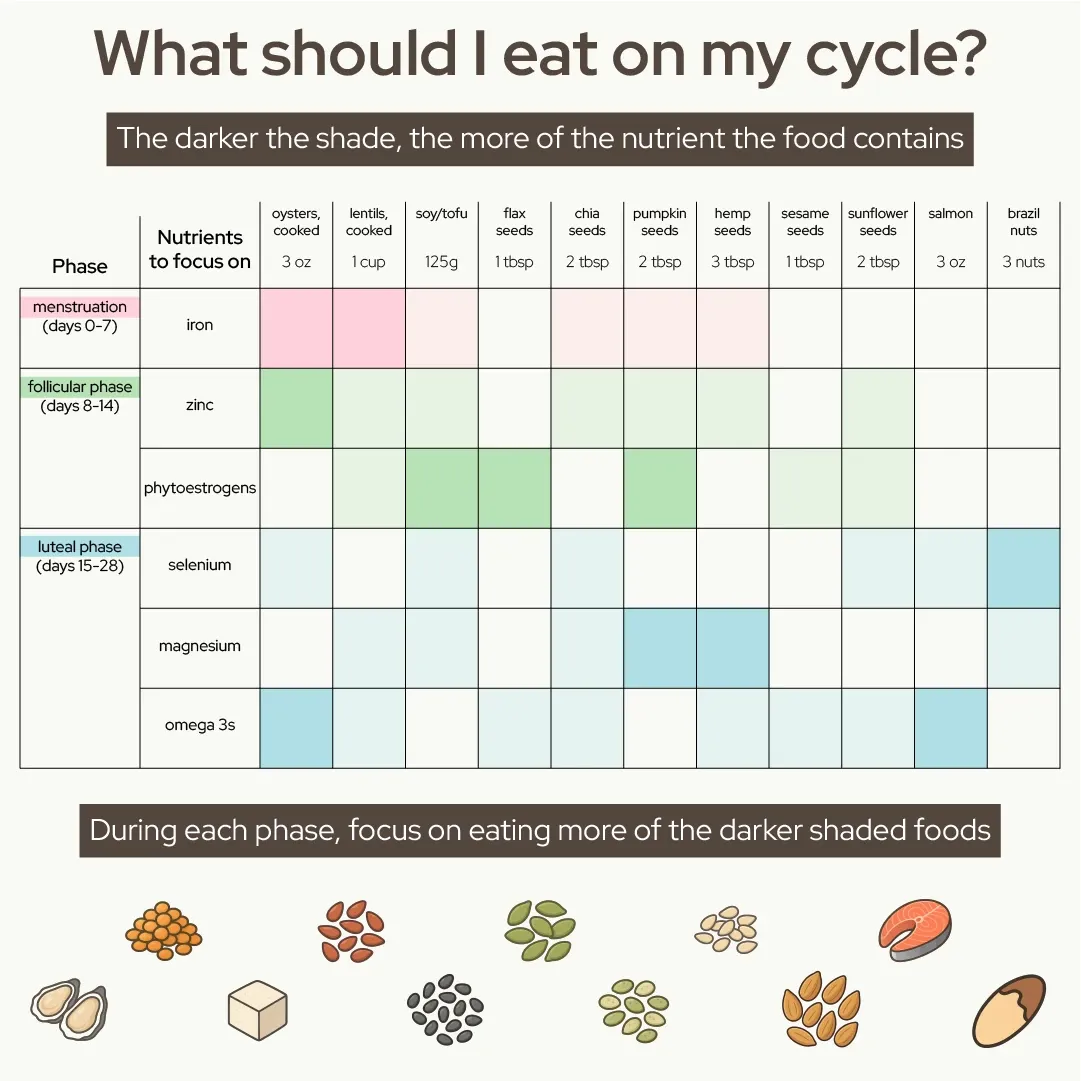
The graphic below highlights foods that combine several of the key nutrients covered in this blog. Keep in mind that you need all of these nutrients at all times of your cycle, and simply need more of certain ones at certain times. The day ranges are estimates: your cycle may be slightly longer or shorter depending on your body.
References
- Majeed, I., Nisa, M.U., Rahim, M.A., Ramadan, M.F., Al-Asmari, F., Alissa, M. and Zongo, E. (2025). Role of Seed Therapy on Estrous and Non-Estrous Cycle in Healthy Female Rats. Food Sci Nutr, 13, 4692. https://doi.org/10.1002/fsn3.4692
- Kapper, C., Oppelt, P., Ganhör, C., Gyunesh, A. A., Arbeithuber, B., Stelzl, P., & Rezk-Füreder, M. (2024). Minerals and the Menstrual Cycle: Impacts on Ovulation and Endometrial Health. Nutrients, 16(7), 1008. https://doi.org/10.3390/nu16071008
- Oregon State University, Linus Pauling Institute. (n.d.). Lignans. Micronutrient Information Center. https://lpi.oregonstate.edu/mic/dietary-factors/phytochemicals/lignans
- U.S. Department of Agriculture & U.S. Department of Health and Human Services. (n.d.). Food sources of iron. Dietary Guidelines for Americans 2020–2025. https://www.dietaryguidelines.gov/resources/2020-2025-dietary-guidelines-online-materials/food-sources-select-nutrients/food-sources-iron
- Colino, S. (2024, December 27). Fruits and vegetables are less nutritious than they used to be. National Geographic. https://www.nationalgeographic.com/magazine/article/fruits-and-vegetables-are-less-nutritious-than-they-used-to-be
- National Institutes of Health, Office of Dietary Supplements. (2021, March 26). Zinc: Fact sheet for health professionals. https://ods.od.nih.gov/factsheets/Zinc-HealthProfessional/
- National Institutes of Health, Office of Dietary Supplements. (2022, March 29). Magnesium: Fact sheet for health professionals. https://ods.od.nih.gov/factsheets/Magnesium-HealthProfessional/
- Kulkarni, S. A., Ekbote, V. H., Sonawane, A., Jeyakumar, A., Chiplonkar, S. A., & Khadilkar, A. V. (2013). Beneficial effect of iron pot cooking on iron status. Indian Journal of Pediatrics, 80(12), 985–989. https://doi.org/10.1007/s12098-013-1066-z
- Lucky Shakti Leaf (maker’s product page). (n.d.). About us. https://luckyshaktileaf.com/pages/about
- Unfer, V., Casini, M. L., Gerli, S., Costabile, L., Mignosa, M., & Di Renzo, G. C. (2004). Phytoestrogens may improve the pregnancy rate in in vitro fertilization-embryo transfer cycles: a prospective, controlled, randomized trial. Fertility and Sterility, 82(6), 1509–1513. https://doi.org/10.1016/j.fertnstert.2004.07.934
- Thompson, L. U., Boucher, B. A., Liu, Z., Cotterchio, M., & Kreiger, N. (2006). Phytoestrogen content of foods consumed in Canada, including isoflavones, lignans, and coumestan. Nutrition and cancer, 54(2), 184–201. https://doi.org/10.1207/s15327914nc5402_5