How to Get Enough Calcium in Pregnancy
Calcium does more than build bones in pregnancy: it can cut preeclampsia risk by more than half. A dietitian's guide to how much you need, the best dairy and non-dairy sources, and a sample day of eating.
Ashwini Achutharaman, RD Intern & Dr. Abrar Al-Shaer, PhD, RD ·

When you think calcium, what is the first thing that comes to mind? Chances are “milk” and “bones” are among those words. Calcium is one of the many micronutrients that is essential during pregnancy to protect your health and to build a strong baby. But milk is not the only way to get calcium. Read on to understand about why calcium is important and how you can make simple tweaks to your everyday meals to boost your calcium intake. For inspiration on how to build your plates optimally, read our post Key Nutrients to Boost Your Baby’s Brain Development.
Why Calcium Matters for Pregnancy Beyond Bone Health
Calcium is also important to reduce your risk of preeclampsia. Preeclampsia is defined as persistent high blood pressure that occurs during pregnancy [7]. If it is not managed, it can lead to issues in your kidneys, brain, and lungs. One of the common treatment options for preeclampsia is aspirin, however, taking aspirin for a long period of time can cause negative side effects throughout your body. In search of a safer alternative to reducing preeclampsia incidence, researchers in the 1980s noticed that Mayan women in Guatemala had a high calcium diet and a low incidence of preeclampsia [8]. Since then, studies have confirmed this connection, estimating that getting enough calcium through food can reduce risk of preeclampsia by over 50% [2].
Calcium is also important for your bone health. Since your baby cannot get calcium from food while still in the womb, they pull from your storages to satisfy their requirements to grow [1]. You need strong bones to be able to support and carry your child, even after they are born. Thus, it is important to ensure you are eating enough calcium to prevent your risk of low bone mineral density which can later worsen into osteoporosis or osteopenia [4]. “Osteo” means bones and “porosis” means holes, so osteoporosis translates to “holes in your bones”. Osteoporosis makes your bones thinner so they are more fragile and prone to fractures.
How can I make sure my baby has strong bones?
A strong, healthy baby is supported with strong, healthy bones. The foundation of these bones is calcium. In fact, nearly 99% of the calcium in your entire body is stored in your bones. Not getting enough calcium can put your baby at a higher risk of brittle bones. A baby’s first few years of life are the time when they are growing the fastest, but not having enough calcium can reduce this growth rate [4].
What foods are highest in calcium?
How much calcium do you actually need? The recommended daily allowance according to the US Dietary Guidelines is 1000-1300mg for pregnant and lactating individuals. If you are at a higher risk for preeclampsia, the recommended intake is 1500mg. While most people associate calcium with dairy, there are plenty of non-dairy sources that can help you meet your calcium needs. Here are some dairy and non-dairy foods that are calcium rich based on their typical serving size:
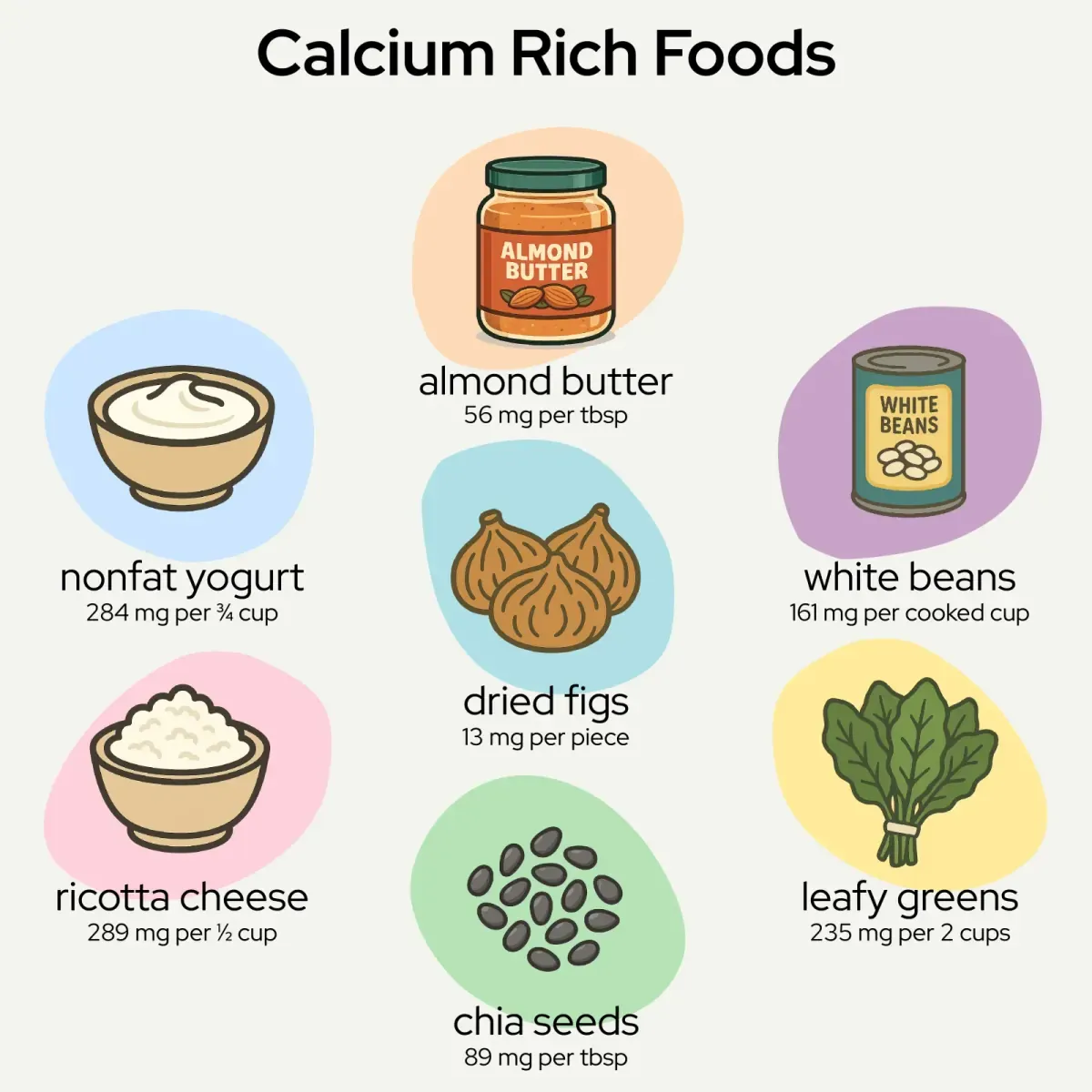
If you are in need of inspiration for how to combine these ingredients, consider this sample day of eating that gives you around 1500 mg of calcium with no dairy.
- Breakfast: carrot tahini oatmeal (466 mg)
- Lunch: tilapia fish tacos (344 mg)
- Snack: chewy prune and almond bites (61 mg)
- Dinner: tofu quinoa bowl with peanut sauce (595 mg)
Do I need to take a calcium supplement?
As the name implies, a supplement should only be added to your routine if you are unable to meet the baseline requirements of 1000 mg/day or 1500mg/day if you have pre-eclampsia risk factors. Taking too much calcium can have negative effects for both you and your baby. If you are unsure of whether to supplement or want more ideas on how to get calcium through food, our team is happy to consult with you.
References
- Nutrition in pregnancy: dietary requirements and supplements. UpToDate. https://www.uptodate.com/contents/nutrition-in-pregnancy-dietary-requirements-and-supplements
- Woo Kinshella, M. L., Sarr, C., Sandhu, A., Bone, J. N., Vidler, M., Moore, S. E., Elango, R., Cormick, G., Belizan, J. M., Hofmeyr, G. J., Magee, L. A., von Dadelszen, P., & PRECISE Network. (2022). Calcium for pre-eclampsia prevention: A systematic review and network meta-analysis to guide personalised antenatal care. BJOG, 129(11), 1833-1843. https://doi.org/10.1111/1471-0528.17222
- USDA FoodData Central.
- Kongwattanakul, K., Duangkum, C., Ngamjarus, C., Lumbiganon, P., Cuthbert, A., Weeks, J., & Sothornwit, J. (2024). Calcium supplementation (other than for preventing or treating hypertension) for improving pregnancy and infant outcomes. Cochrane Database of Systematic Reviews, Issue 11, CD007079. https://doi.org/10.1002/14651858.CD007079.pub4
- Gerede, A., Papasozomenou, P., Stavros, S., Potiris, A., Domali, E., Nikolettos, N., Eleftheriades, M., & Zafrakas, M. (2025). Calcium supplementation in pregnancy: a systematic review of clinical studies. Medicina, 61(7), 1195. https://doi.org/10.3390/medicina61071195
- Getting to Baby.
- Preeclampsia Foundation.
- Gomes, F., Ashorn, P., Askari, S., Belizan, J. M., Boy, E., Cormick, G., Dickin, K. L., Driller-Colangelo, A. R., Fawzi, W., Hofmeyr, G. J., Humphrey, J., Khadilkar, A., Mandlik, R., Neufeld, L. M., Palacios, C., Roth, D. E., Shlisky, J., Sudfeld, C. R., Weaver, C., & Bourassa, M. W. (2022). Calcium supplementation for the prevention of hypertensive disorders of pregnancy: current evidence and programmatic considerations. Annals of the New York Academy of Sciences, 1510(1), 52-67. https://doi.org/10.1111/nyas.14733